This portfolio contains confidential work.
Please enter the password to continue.
Incorrect password. Try again.
Seven years building high-performing design teams at Meta, across Facebook's highest-traffic social surfaces. Currently available for senior design management roles.
A design manager who is sent into hard situations and makes them better. Over three years I've repeatedly stepped into teams that were under-led, mid-reorg, or short a manager — and turned them around: rebuilding cross-functional trust, raising the craft bar, managing out underperformers, hiring strong replacements, and shipping measurable product wins. My scope grew from leading design for a single product to managing managers and ICs across an entire product portfolio.
Surfaces I've led
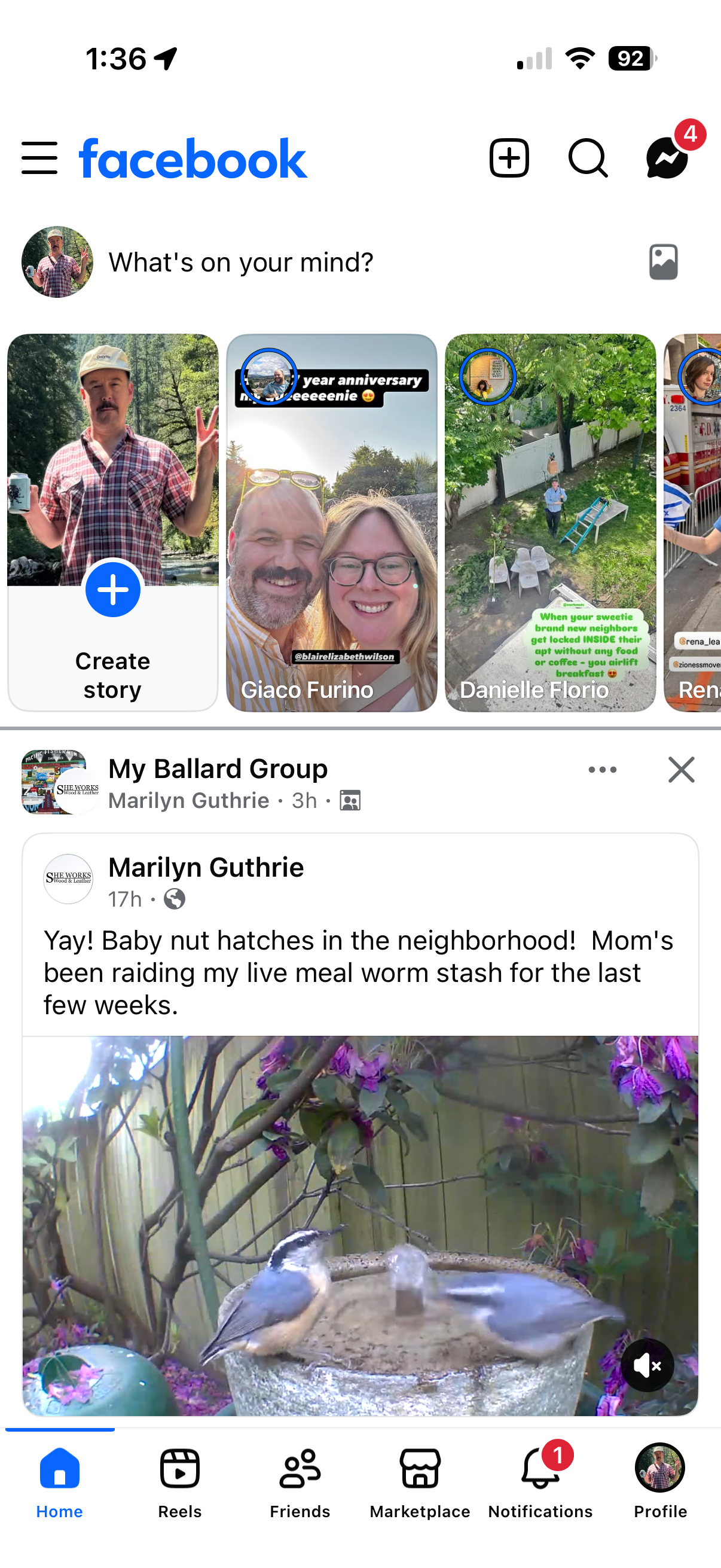
Feed
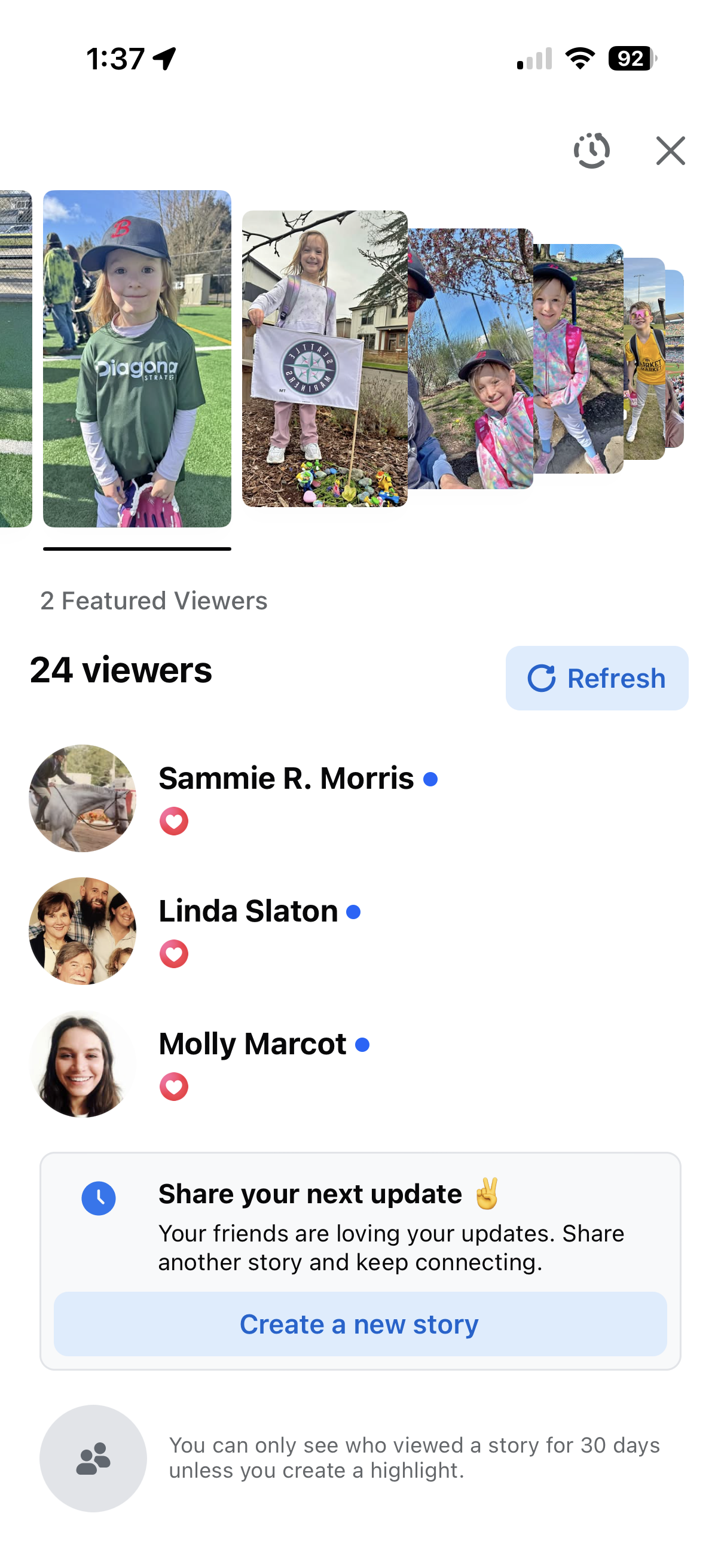
Stories
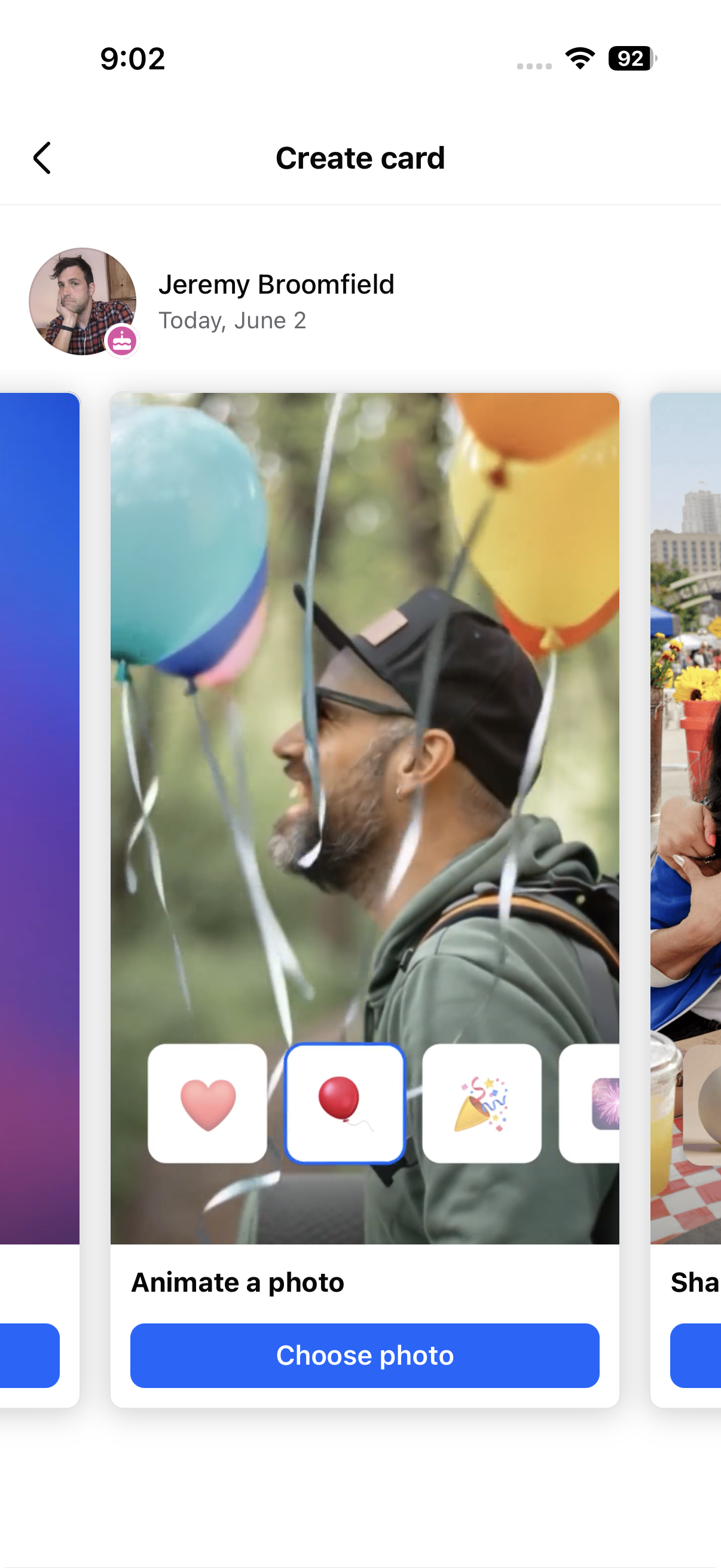
Birthdays
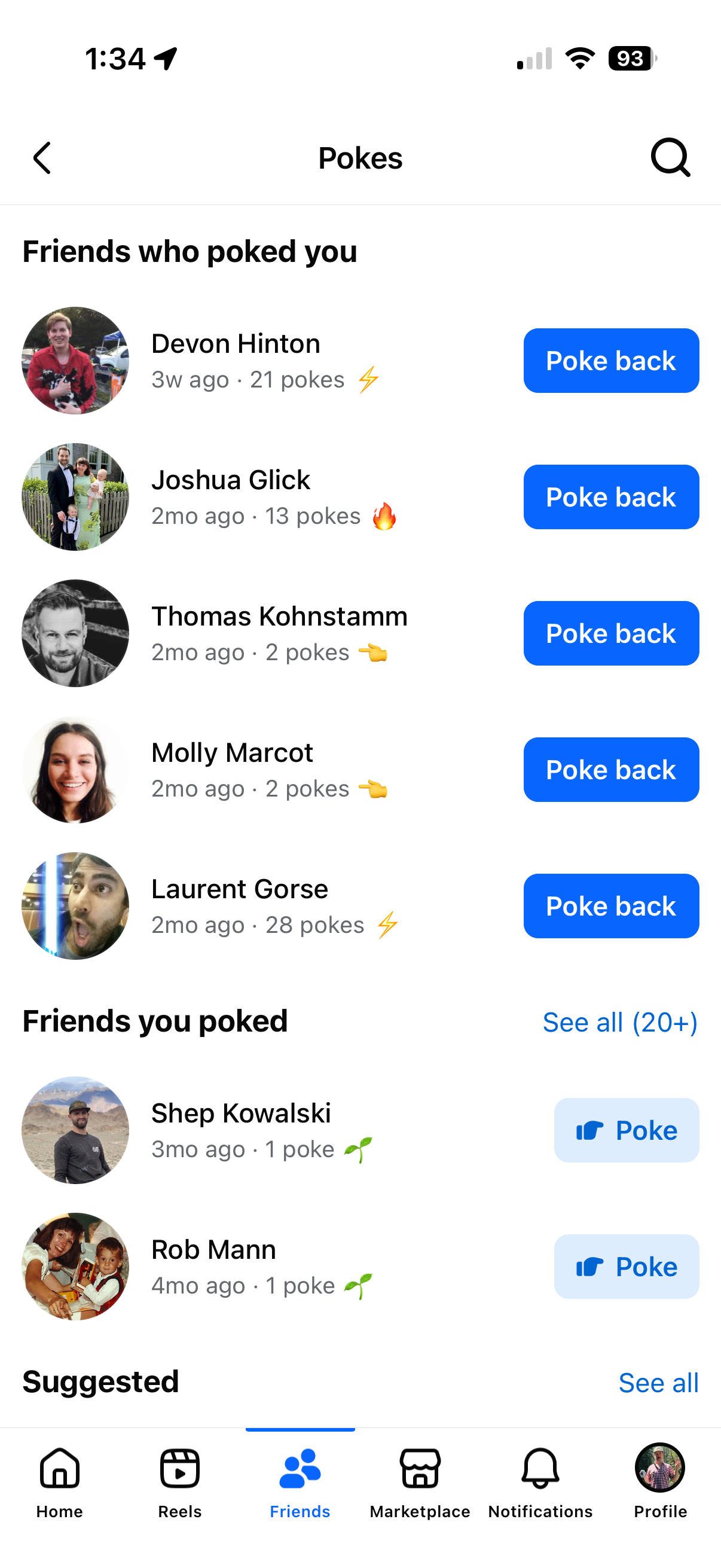
Pokes
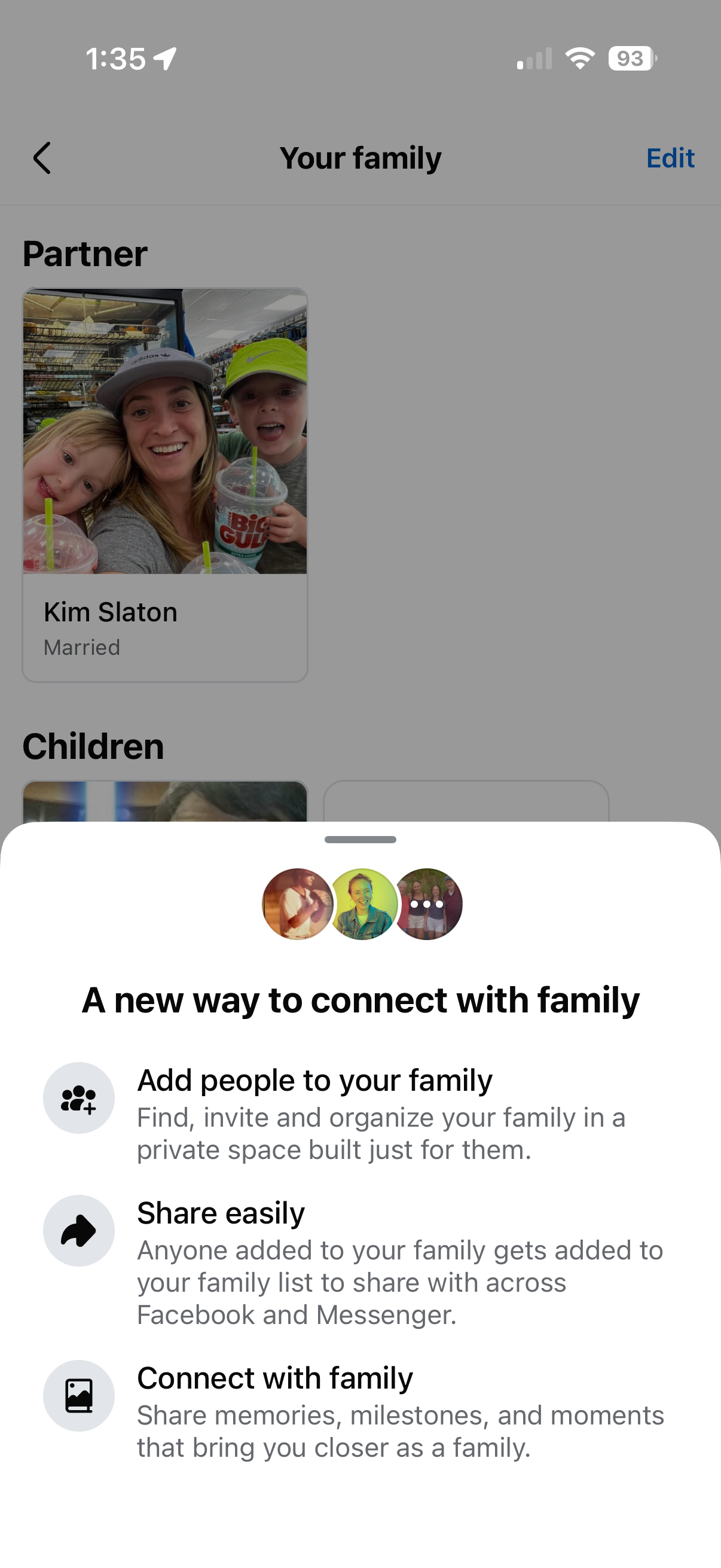
Family
When Marketplace Growth lost 100% of its designers and its design manager, I stepped in as interim lead, onboarded two new designers, and the team still exceeded its primary engagement goal — 2.5× the target. On Marketplace Jobs, I co-led through cross-functional friction and a difficult personnel situation, then sponsored a vision sprint that shaped the roadmap and contributed to dramatic results after launch: ~9× jobs supply, ~15× engaged daily users.
I'm a proactive, decisive manager. In 2025 I identified performance issues early, partnered with HR, and managed each situation to a timely, humane resolution — while in the same period successfully onboarding four new designers with no gaps in coverage. My team's engagement scores improved across satisfaction, "best work," and intent-to-stay, with 100% favorable scores on collaboration, inclusion, and prioritization.
Partners describe my communication as a strength — "crisp and clear, a superpower" — and point to my ability to cut through noise to identify the real decision and focus the conversation there. I've walked into degraded PM/designer relationships and rebuilt them by setting clear expectations on both sides, streamlining rituals, and giving designers the time and information they need for high-craft output.
I stay hands-on as a power user — filing substantive product feedback, dogfooding prototypes, and once tracing a production bug to its root cause so engineering could fix it. I bias toward the minimum needed for a real result, not over-designing. And I give designers room to own their domains: partners describe my teams moving from heavy oversight to "an independent team that is really starting to jive," with each lead the master of their space.
Product Design Manager · Social Gaming, Pokes, Family, and Celebrations
When I joined the Interactions team in H2 2025, it had been without a strong design manager. The picture was: a shaky roadmap, roughly 60% designer turnover, two underperforming ICs, and PM↔PD trust that had eroded. These aren't growth-phase products — Social Gaming, Pokes, Family, and Celebrations are the mechanisms that prompt people to reach out, poke an old friend back, send a birthday card, share a family moment. The design work is less about finding product-market fit and more about making well-established behaviors feel worth doing again, at scale, without breaking what already works.
PDM for Interactions Design through H2 2025. In March 2026 I transitioned to PDM for Stories — a team of 5 PDs that had been operating without a design manager, which grew to 7 with two new IC additions. Within 3 weeks of joining I conducted stakeholder interviews, made key design allocation decisions and published them across all 7 PDs, created a team microsite, and co-authored a redesigned rhythm of business — Design Sync, Design Crit (open to XFN), Design Review, Monthly Faves, and more. Throughout both roles I acted as the de facto design director: setting direction, resetting how the team operated, and making sure the work reaching leadership was strong enough to ship.
The first priority was stabilizing the team. I reset the rhythms of business — eliminated unnecessary meetings, set clear expectations for crit, design review, and XFN communication, and rebuilt PM↔PD trust that had degraded before I arrived. Our engineering manager described the result: "Hunter in short order righted the ship." That operational work created space for the product work.
On product: I took over a set of FeedXFN proposals that weren't strong enough to ship, raised the quality bar (including killing one outright), and won app leadership approval for Social Bubbles — which delivered +0.02% FES, 2× the team's target. I drove H1 2026 design planning across all four product areas despite 60% PD turnover, setting a clear vision for Social Gaming, Pokes, Family, and Celebrations before many of the designers who'd execute it had joined. I also oversaw an AI-powered birthday card creation experience — animated photo selection and AI-assisted options baked into the creation surface — as one of Celebrations' highest-craft outputs of the half.
Birthday card creation
Stories + Pokes
Product Design Manager · Facebook Marketplace Growth
Young adults in the US and Canada had become disengaged from Facebook's Feed and perceived that other young adults weren't on the platform. The existing Sellers You Follow Stories unit couldn't reach this audience at scale because it depended on friend counts and listing inventory that most young adults didn't have. The question was how to make Marketplace feel social and relevant again for an audience that was tuning out.
Product Design Manager for Marketplace Growth across H2 2024–H1 2025, navigating Design Director reviews, Verticals Experience Change Reviews, and Feed XFN reviews, while maintaining design continuity through 100% designer turnover between halves and a significant Messenger reorg. My job was equal parts design direction and stakeholder management: making sure the team's work held up to scrutiny, and that the right people were aligned before reviews — not during them.
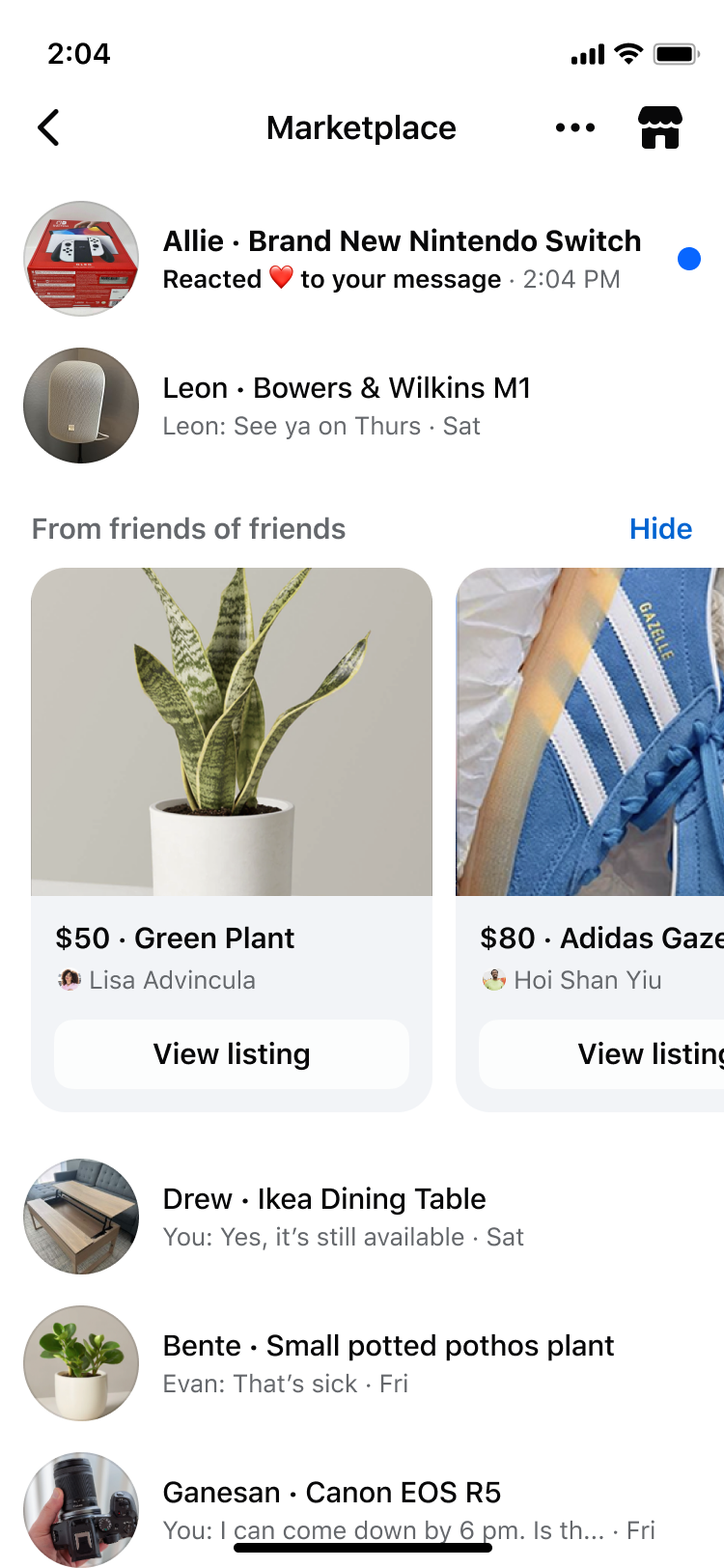
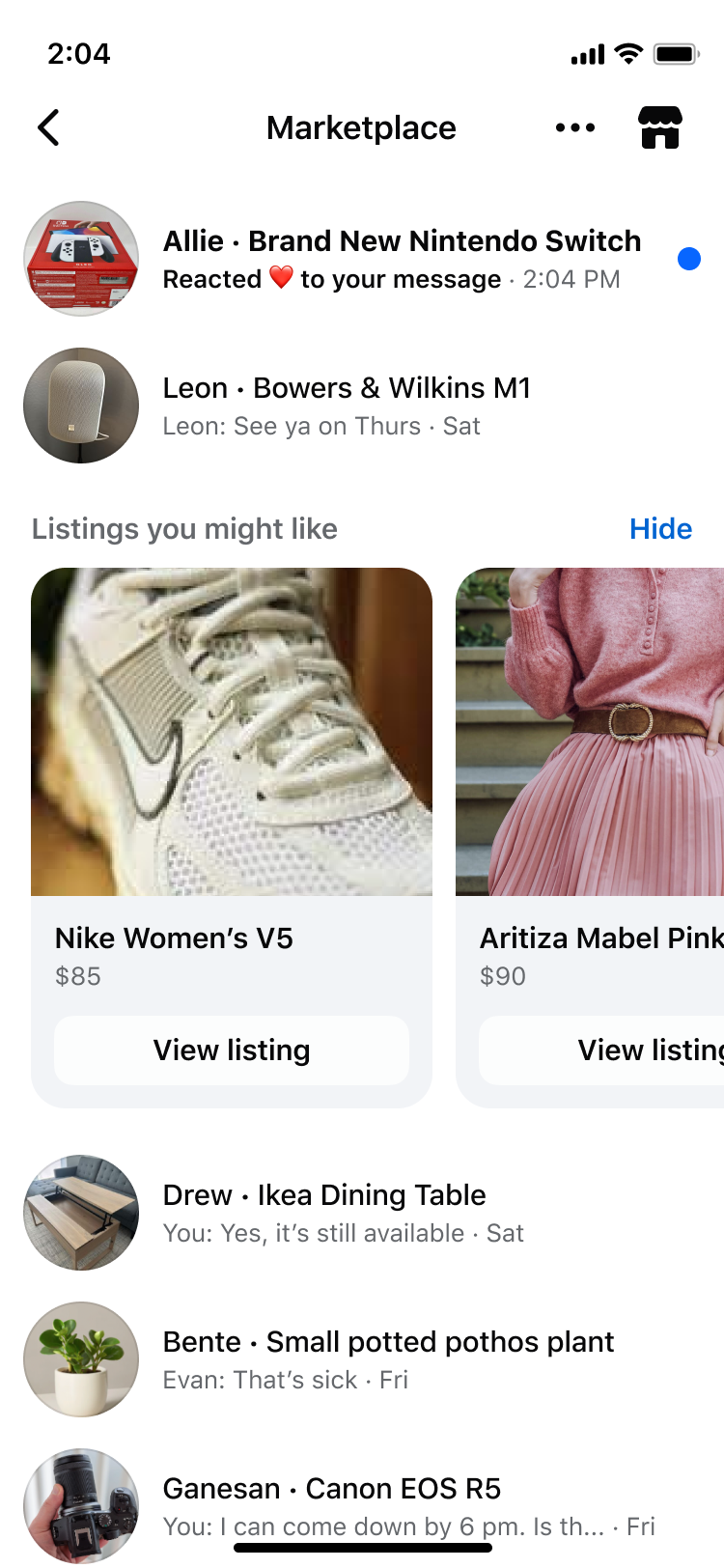
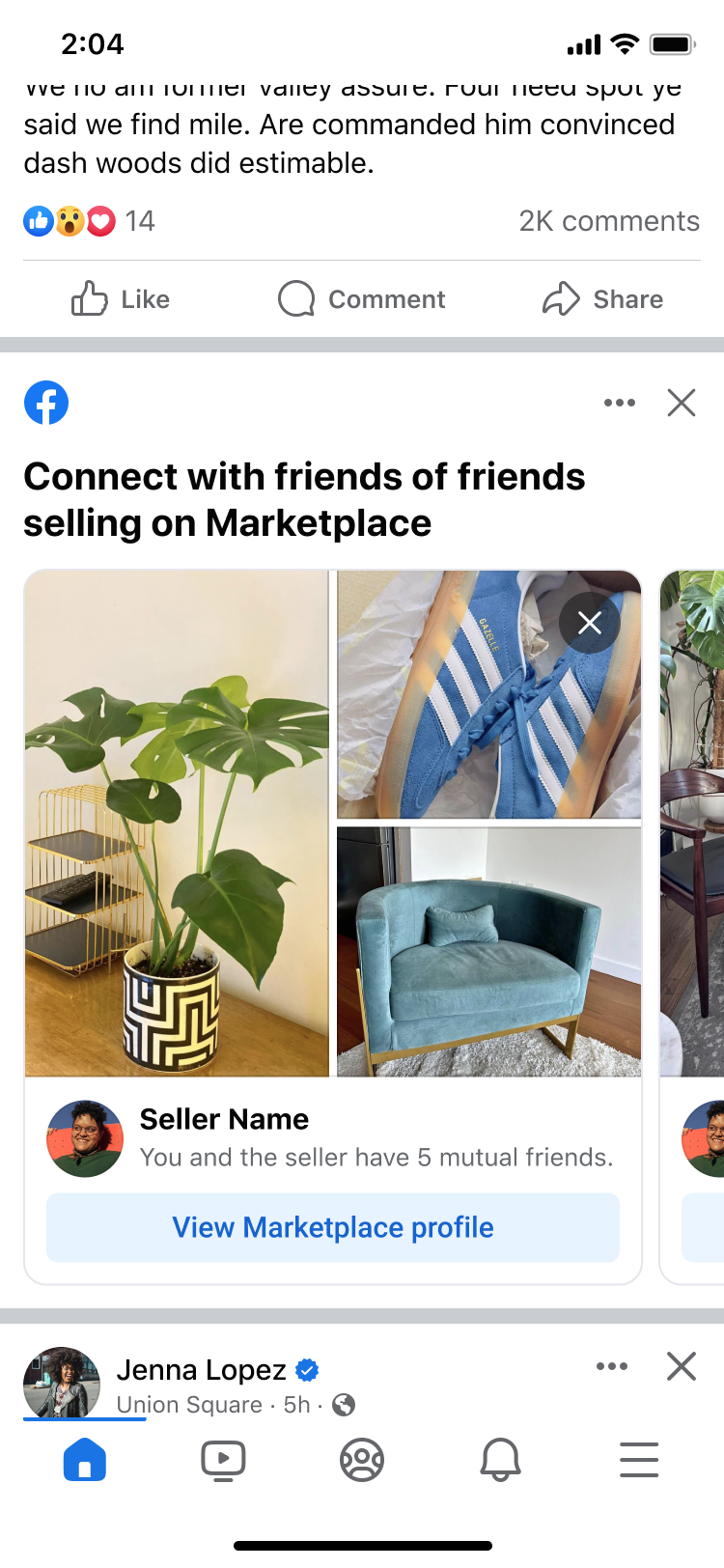
We designed Friends of Friends (FoF): a Feed unit surfacing Marketplace listings from sellers who share mutual friends with the viewer. V1 tested whether social connection drives listing engagement. The data revealed something more interesting — users had relatively low listing CTR, but were 12× more likely to send friend requests. V2 pivoted accordingly: foreground the connection, not the commerce. We then extended FoF into the Messenger inbox, exploring how to prevent Marketplace conversations from becoming dead ends after a transaction — turning a commerce surface into a springboard for genuine social reconnection.
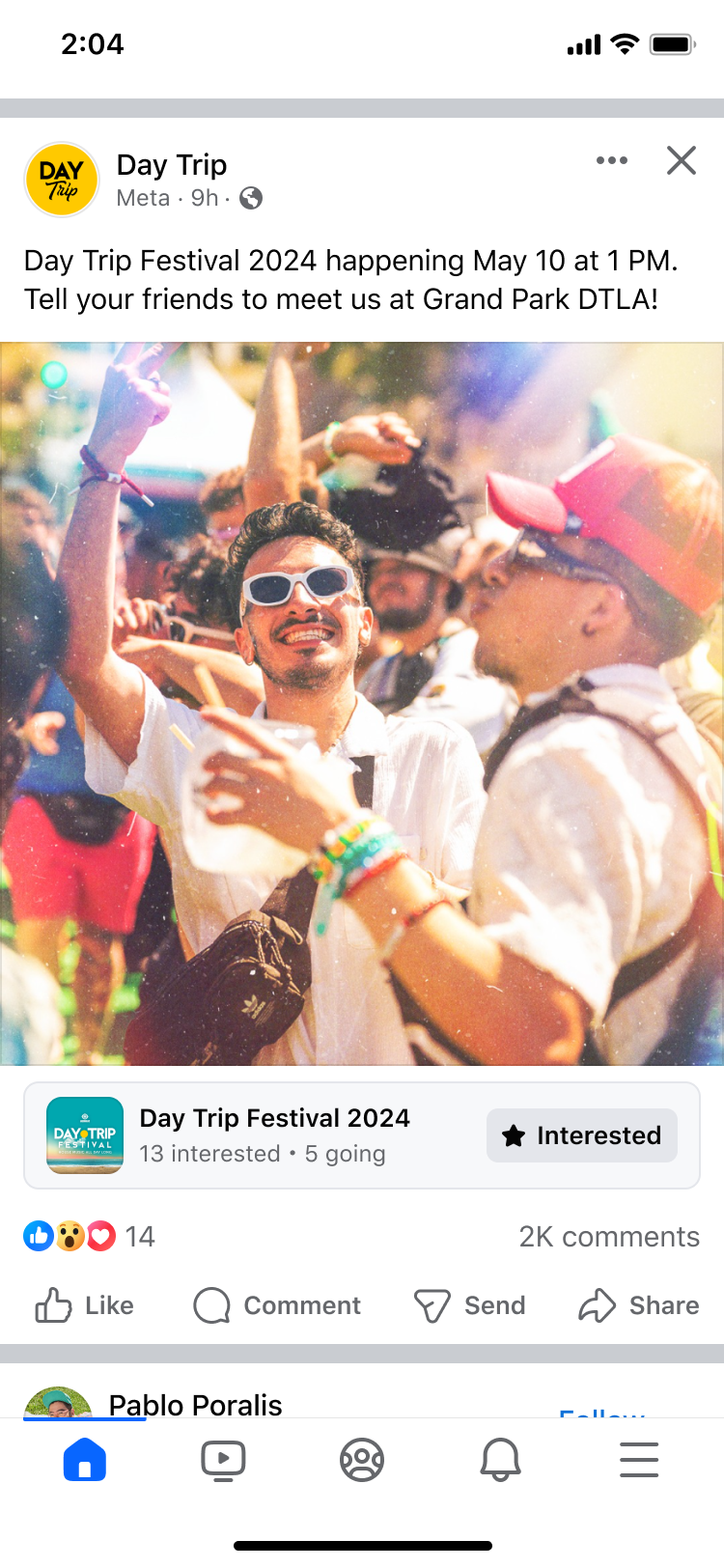
Friends of Friends V2 — people focus
Friends of Friends in Messenger
Concept, design, and working prototype built solo in Cursor · Facebook Messenger platform
Most social games treat conversation as a side effect. I wanted to design a game where conversation was the point — where the mechanic itself generated real moments between real friends, and where what got revealed was something true about how well you know each other.
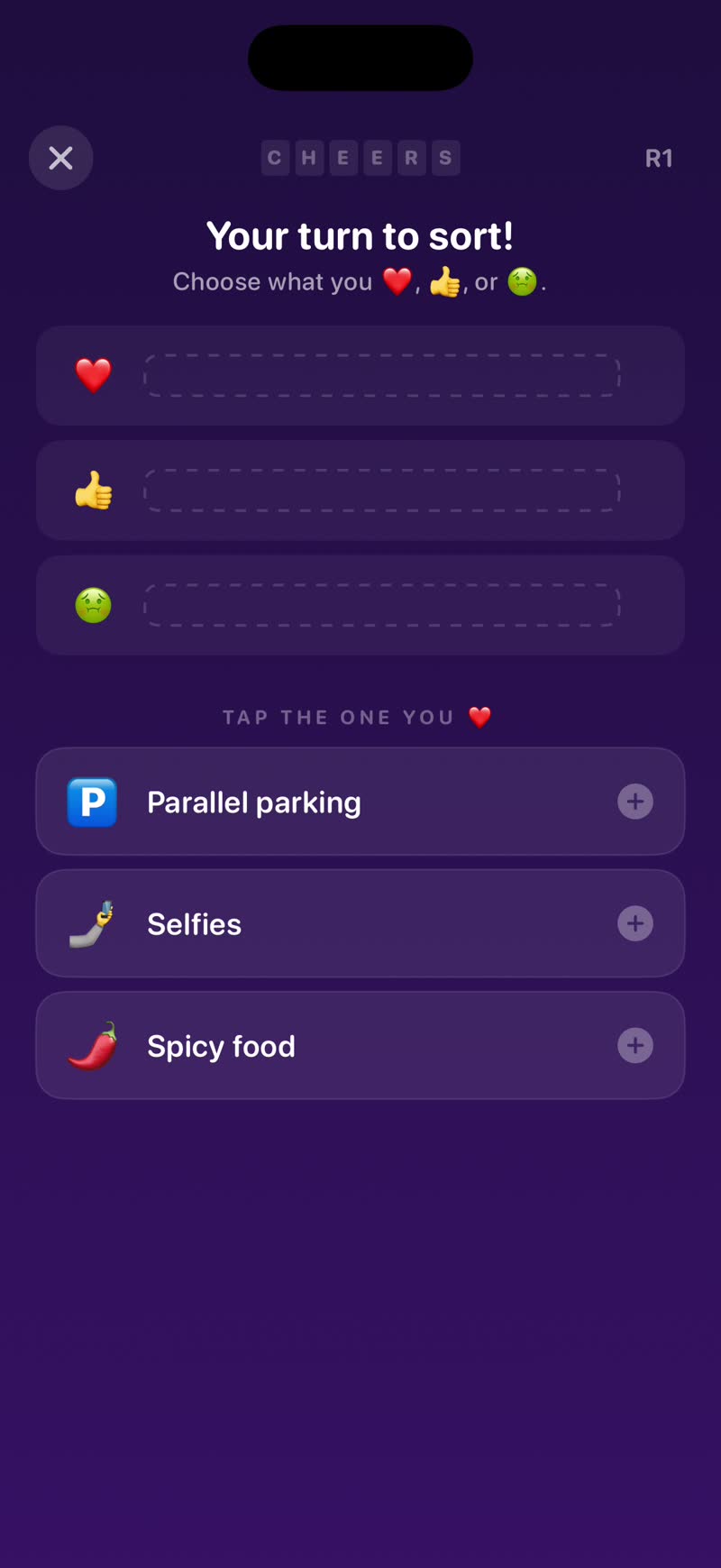
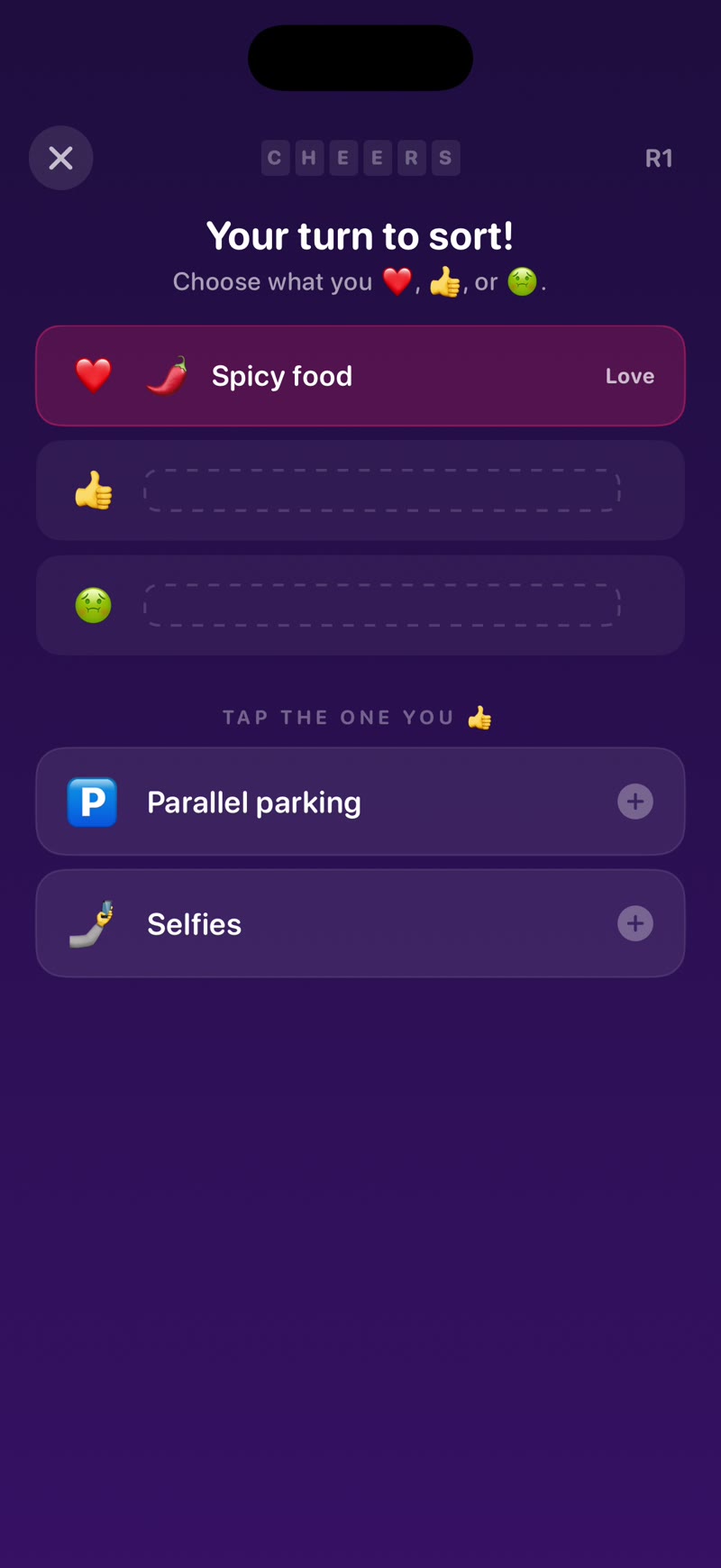
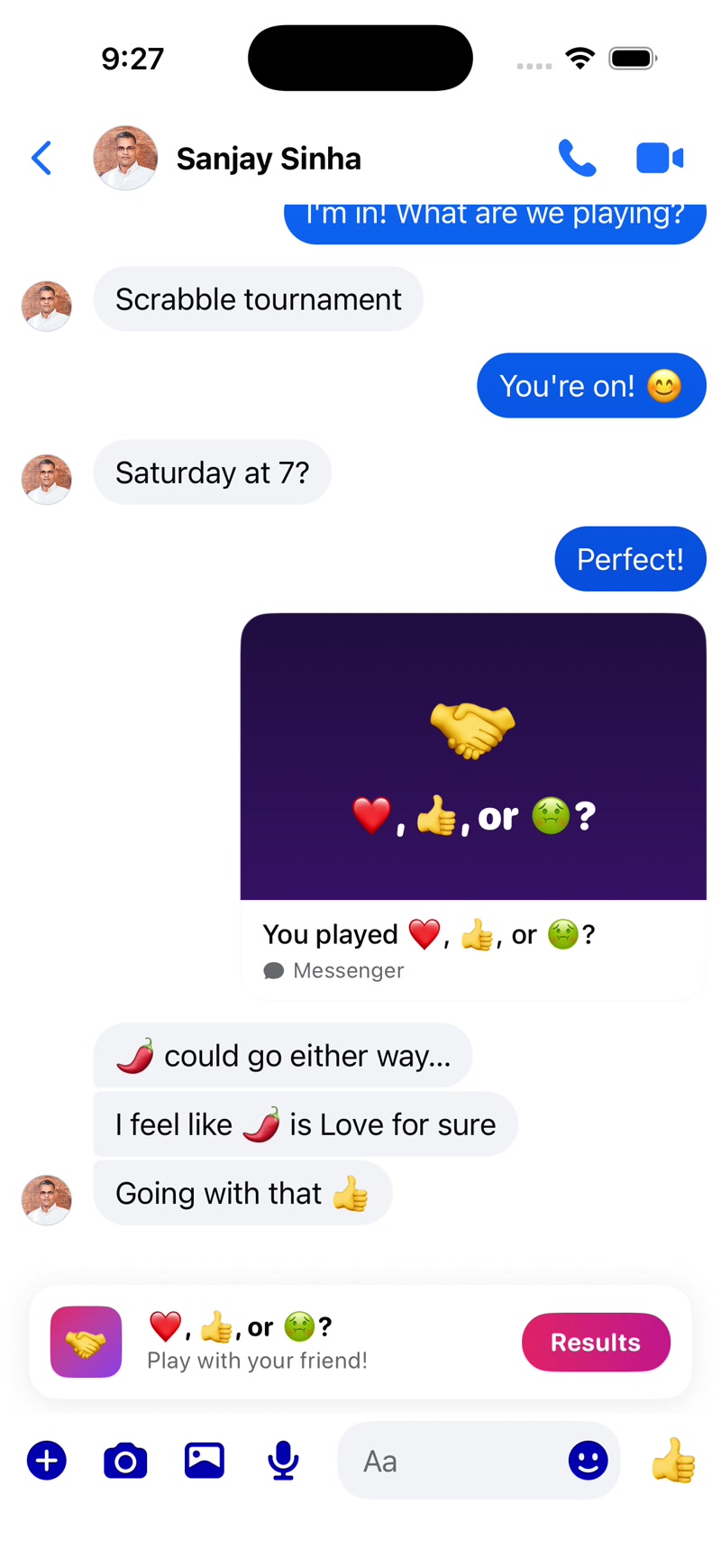
Love, Like, or Yuck? is a Facebook Messenger–native game for two players. Round 1: You sort three items — parallel parking, selfies, spicy food — into Love, Like, or Yuck. Round 2: Your friend guesses your answers. Correct guesses spell out CHEERS, one letter at a time, and incorrect guesses spell CHEERS for the game. Get all six right before the game does and you win.
The mechanic is deliberately simple, but what it generates isn't: the moment between locking in your answers and seeing your friend's guesses is where the game actually lives. The prototype preserves that moment by surfacing the game card inside the Messenger thread itself, so the debate ("I feel like 🌶️ is definitely Love") happens in the same place as the reveal.
Built end-to-end in Cursor using AI-native development. I designed the concept and interaction model, then built the working prototype myself — game logic, state management, UI, and the Messenger integration surface. This is the kind of hands-on prototyping I've leaned into as AI tools have made it practical for design leaders to build, not just direct.
Working prototype · built in Cursor

Sorting screen — empty state

Sorting in progress

The social moment — discussing before revealing
Product Design Lead · Facebook Verticals
Verticals content — Events, Marketplace listings, Fundraisers — had interactions and connected objects that simply didn't exist on Facebook's Feed. Users couldn't save a listing, act on an event promotion, or discover tagged content without leaving Feed entirely. Actors who wanted to use dynamic media couldn't also surface an interactive attachment. The workarounds had accumulated into genuine design debt: Fundraisers and Business Messaging both used ad hoc detachment-like patterns that looked like bugs. A design sprint with a partner team surfaced the root cause — there was no shared pattern for Verticals content to live natively in Feed with multiple tap targets.
Product Design Lead for the Verticals team across H2 2023–H1 2024. An individual contributor product designer and I co-ran the design work for the Feed Detachments project end-to-end: from the initial sprint framing and cross-functional alignment, through the design systems collaboration with the Feed Attachment team, to the Design Director reviews that ultimately advanced the pattern to roadmap consideration.
We defined Feed Detachments — an evolution of the link attachment pattern supporting two independent tap targets, multi-item discovery, and the separation of media from the interactive object. Three use cases anchored the proposal: elevating Events tags in organic posts, letting Marketplace sellers promote listings alongside custom media, and aligning the inconsistent Fundraiser and Business Messaging patterns under a single framework. The goal was a system other teams could adopt, not a one-off fix.
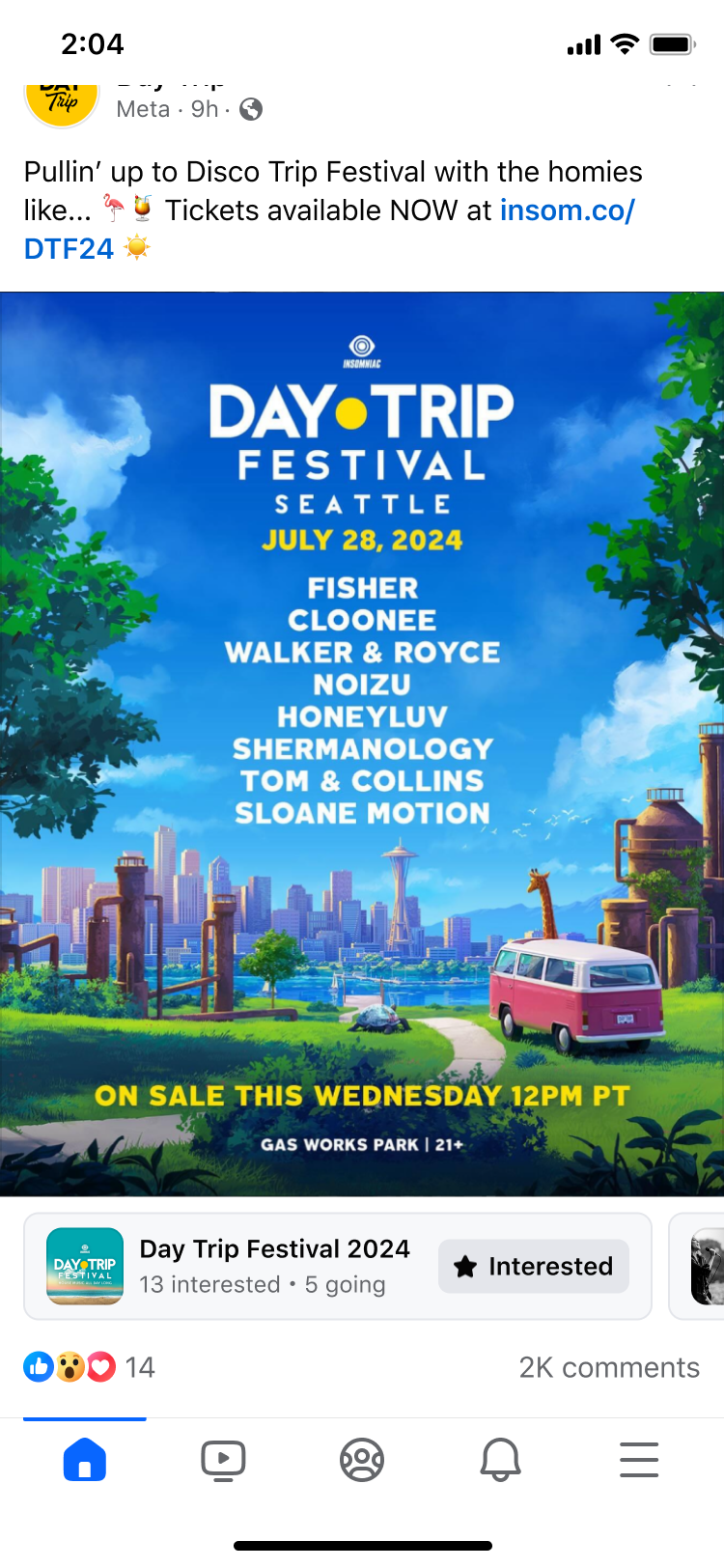
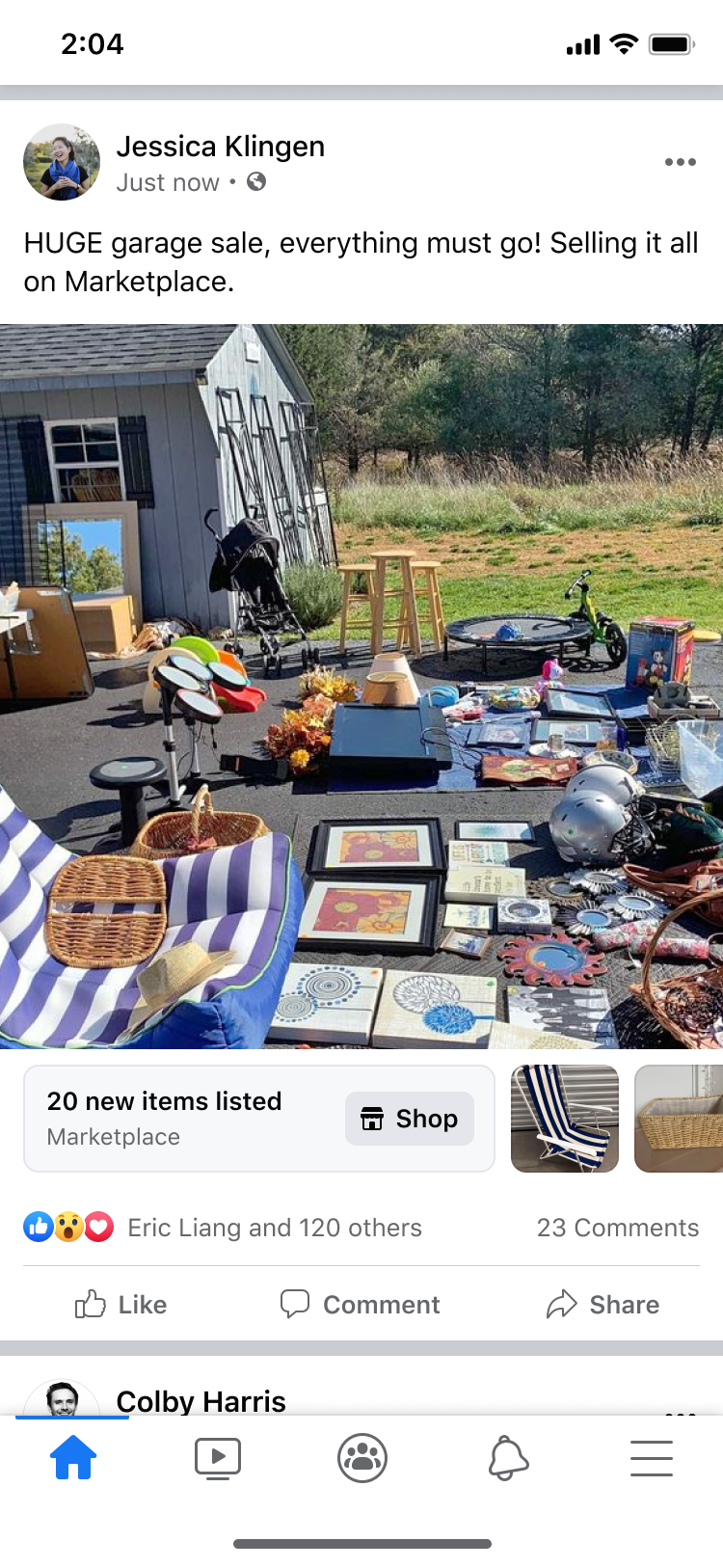
Feed Detachment — Events use case
Feed Detachment — Marketplace use case
Content Design Lead · Facebook Gaming vertical
Fantasy sports is a crowded, established category dominated by ESPN, Yahoo, and a constellation of sports-specific apps. The challenge wasn't just building a product that worked — it was building one that felt approachable for casual players, and convincing some of the biggest IP holders in sports and entertainment to bet on us.
I originated the content design for Facebook Fantasy Games from scratch — the naming, tone, game mechanics language, and the frameworks for how we'd communicate rules, scoring, and social moments across a format that had to work for die-hard fans and casual players alike.
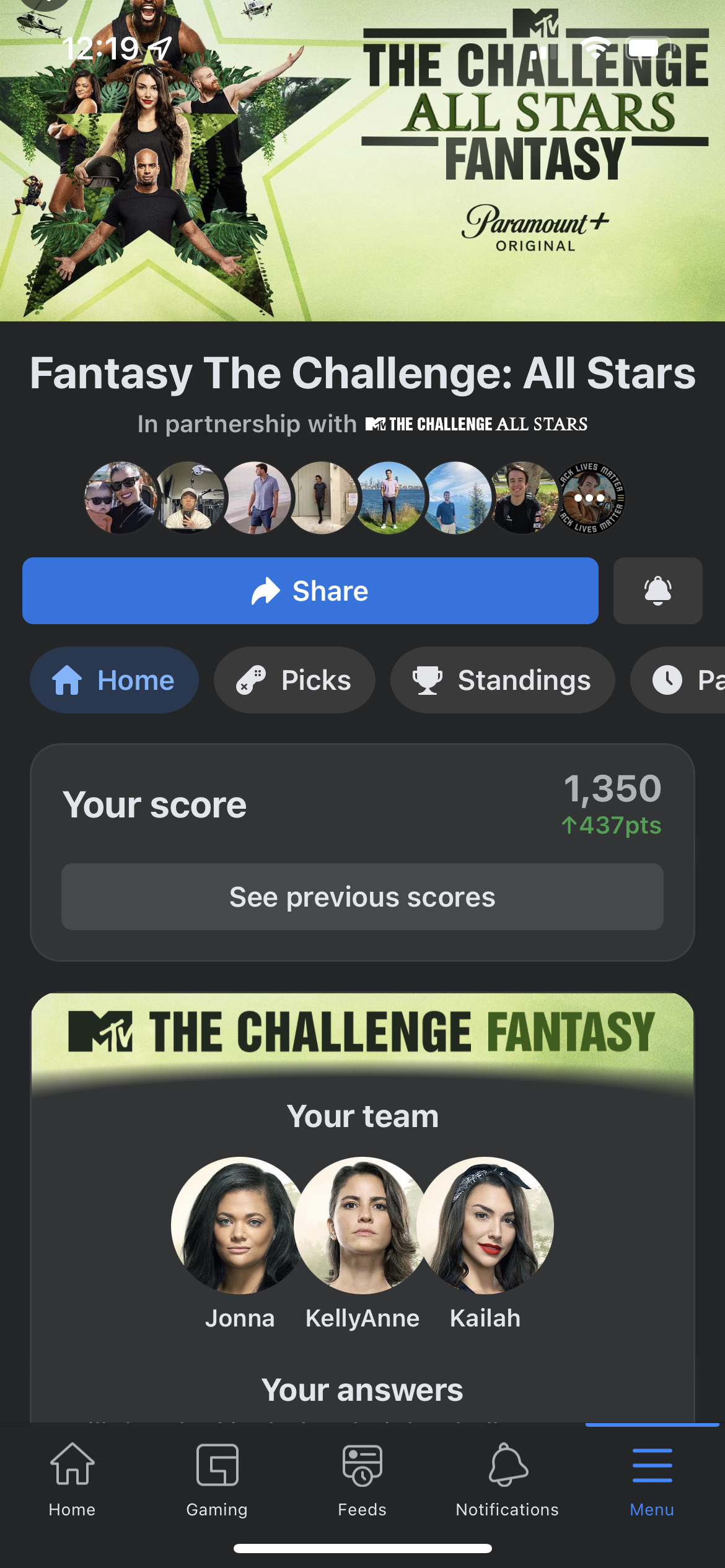
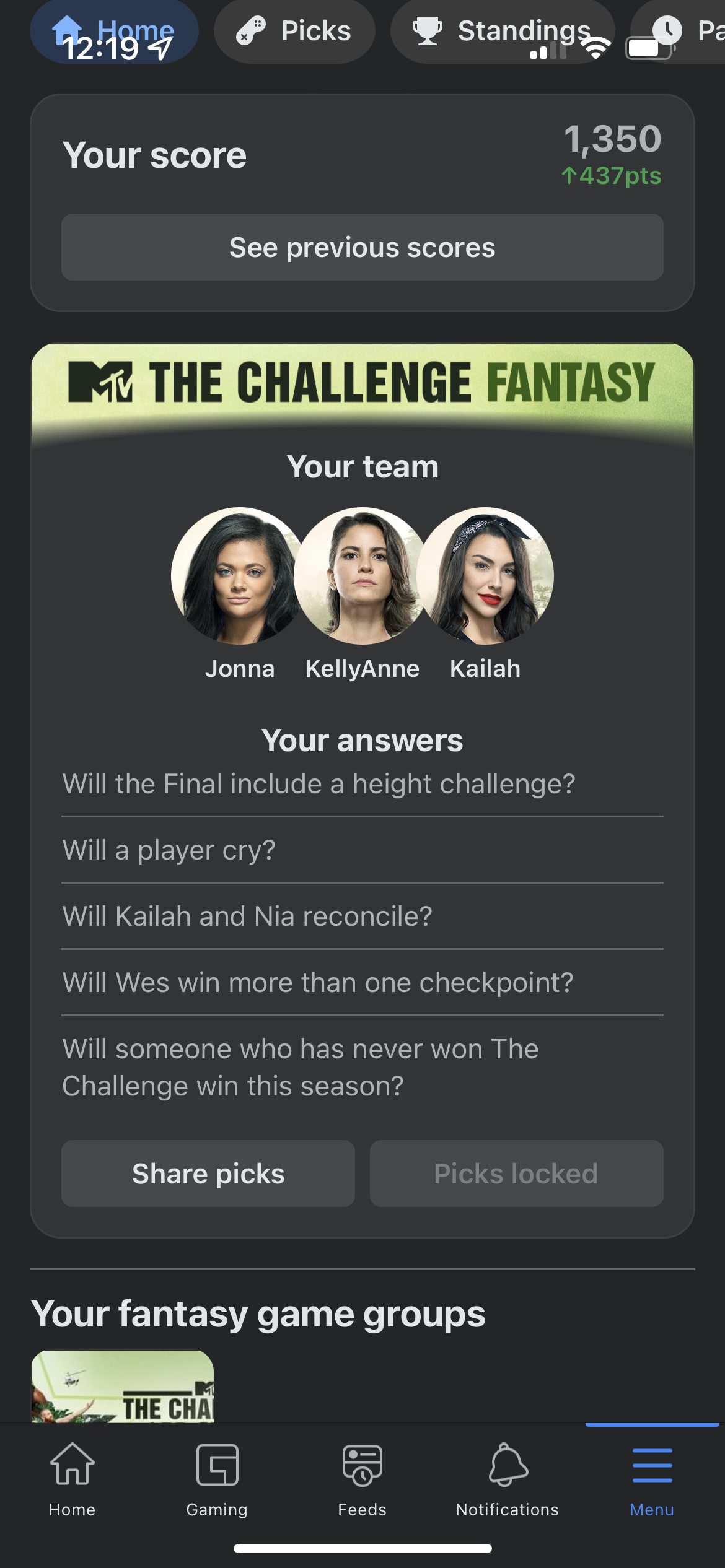
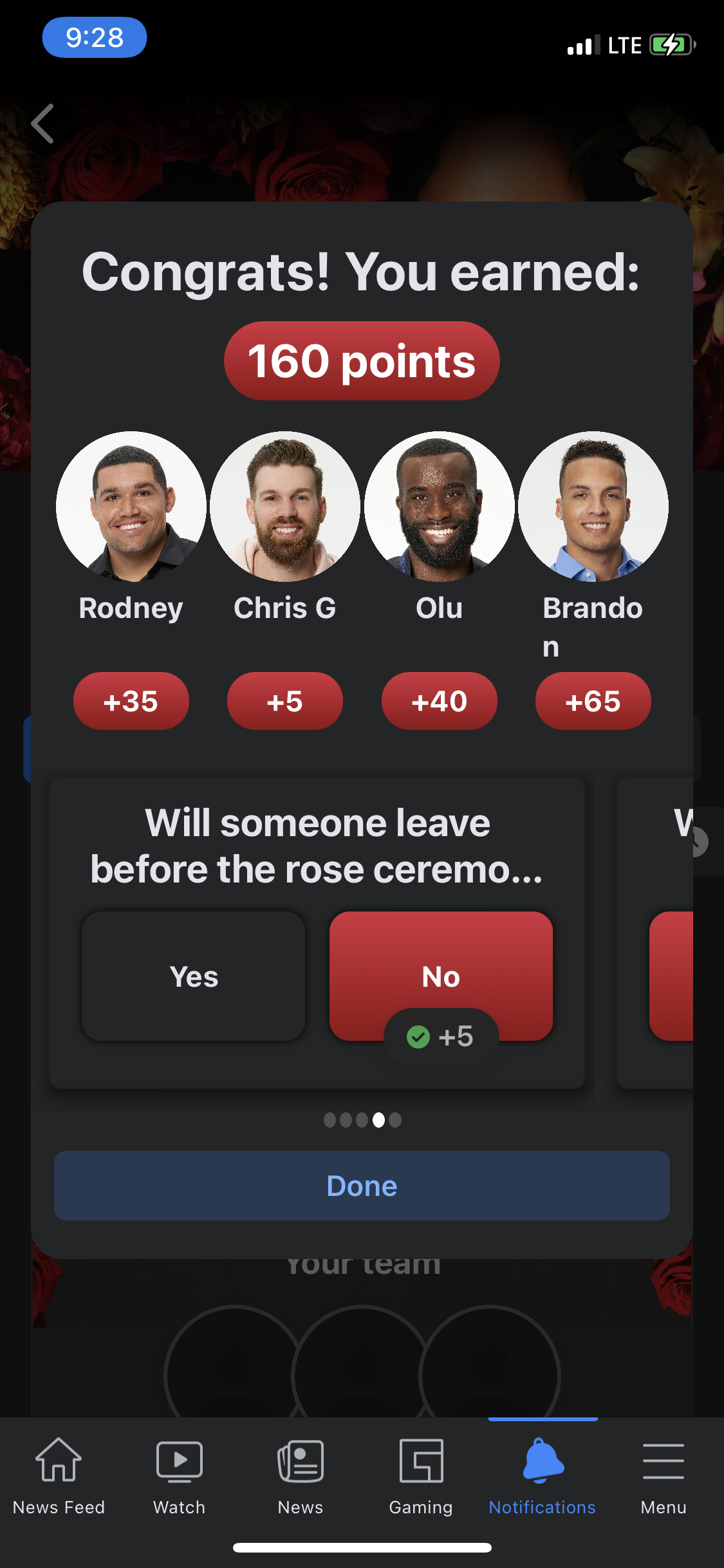
We designed for the social layer first. Most fantasy products treat the game as the core and social features as a side dish. We inverted that: The reason to play on Facebook was that your friends were already there, and our design reflected that — leaderboards, brag moments, and commissioner tools were first-class citizens, not afterthoughts. We also developed a scalable design system for partner launches that could flex across wildly different sports contexts (NFL scoring logic vs. Survivor eliminations) without requiring a full rebuild for each.
Game lobby — The Challenge All Stars
Team picks + score reveal
I came to product design through writing. I spent the first decade of my career as an editor and writer — at The Rough Guides, magazines like PCMA Convene and United Airlines' Rhapsody, and in digital media at Gawker Media Group. That background shapes how I think about design: as a discipline fundamentally about communicating clearly, earning trust, and respecting the person on the other side of the experience.
In 2017 I joined Blizzard Entertainment as a Senior Manager for Communications & Content, where I led the team that launched the Overwatch League — the world's first global city-based esports league — and built content design for multiple Blizzard esports properties. That experience gave me a deep appreciation for what it means to design for a passionate, discerning audience that cares intensely about getting things right.
In 2019 I joined Meta, where I've spent seven years growing from Content Design Manager to Product Design Manager (M2). Along the way I've helped ship products used by billions of people, built and rebuilt design teams through significant organizational change, and developed a practice around the intersection of social design, trust, and AI-native product development.
Outside of work, I'm a gamer — I run a Magic: The Gathering Discord server for players in Seattle and am an active member of many more communities. I'm a graduate of the University of Arkansas (magna cum laude, English) and spent a year at Oxford University's Mansfield College. I once spent five months as a dining attendant at a research station in McMurdo, Antarctica, which I mention because it is both true and a good test of whether someone is paying attention.